Changes in Heart Brought
About by “Facing” the Disaster and Challenges as Earthquake Ruins
-Namie Town Staff-
“Facing the disaster head-on.” For a while after the earthquake, I was looking away from reality.
The reason I became involved with Ukedo Elementary School was a coincidence. However, I believe that facing the facts I had previously avoided has brought many changes to my heart.
Through this article, I hope everyone will value the act of “facing” the situation once again from their respective perspectives.
Days of Anxiety: Wondering if My Mother
Had Been Swept Away by the Tsunami
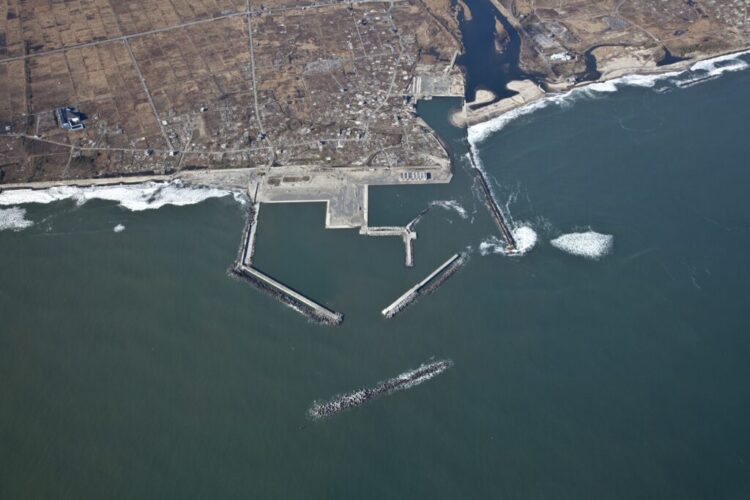
<Post-Disaster Ukedo District>
At the time of the disaster, I was a second-year university student (Fukushima University) on spring break, living in an apartment near the university in Fukushima City. Right before the earthquake struck, I was preparing to go back to my parents’ home in Namie Town and was planning to catch a train between 3:00 and 4:00 PM.
Then the massive earthquake hit. I spent some time in my room while checking on the safety of friends in the neighborhood. I immediately tried to contact my father, mother, and older sister, but the communication lines were overwhelmed and wouldn’t go through. I finally reached my father and sister that evening, but I couldn’t get in touch with my mother.
Fortunately, there was no power outage near the university, so I turned on the TV. It was reporting that “a tsunami is coming,” and about an hour later, footage of tsunami damage from various locations began to flow. I witnessed scenes that were simply hard to believe. To be honest, I felt like I was watching a movie… I couldn’t believe this was happening in Japan.
The reports were showing Sendai Airport and the coastal areas of Iwaki City, so I didn’t know what was happening in the coastal areas of Namie. However, I remember very vividly thinking, “It’s probably the same damage there. Was my mother swallowed by the tsunami…?”
After two or three days of my mother’s whereabouts being unknown, she suddenly showed up at my apartment in Fukushima City instead of calling. Since she had matters related to her school to attend to, she spoke with me for only about 5 to 10 minutes before heading off somewhere else.
Moving and Re-inspiring:
Seeing My Mother Bustle About After the Disaster
During March, I stayed with relatives in Yonezawa and Kitakata, but even then, my mother was constantly checking the safety of the first-graders she was in charge of.
Not just the first-graders, but also children from other grades or from schools she had taught at in the past—if she found out they might be at a nearby gymnasium, she would immediately go to see how they were doing.
After the disaster, my mother worried every day about the safety of the children and their families.
At that time, a young teacher created a mobile message board. My mother would look at posts from students and families saying things like “We are safe and have evacuated to [Location]Shelter,” and if it was a nearby shelter, she would go to check on them.
Seeing my mother look anxious as she drove to the shelters where her students were, and then seeing her look relieved after visiting them, I realized she must have been worried until she saw them with her own eyes.
At that time, seeing this side of my mother as a teacher moved me and gave me a renewed sense of respect for her. As a student back then, I was so preoccupied with my own situation that I couldn’t focus on those around me at all.
Seeing my mother prioritize the school children over herself or her family was something I respected and was deeply moved by.
Coincidence as a Catalyst:
Involvement in Maintaining the Earthquake Ruins

The reason I became involved in developing the earthquake ruins was simply a personnel transfer (laughs). In Namie Town, we don’t conduct preference surveys regarding transfers.
Therefore, around late February to March, an unofficial announcement of the new department (department name only) for transferring staff is suddenly released. I was ordered to transfer to the Secretariat of the Board of Education, and my specific assignment within that department was to be decided by those in positions of section manager or higher for the new fiscal year. As a result of that meeting, I just happened to be assigned to the Local Culture Section.
So, it wasn’t that I volunteered saying “I want to do this work,” and since few people knew that my mother had been a teacher at Ukedo Elementary, I feel it was a fateful personnel transfer in a way.
While I had a strong desire to work for Namie Town, when I first started, I didn’t want to be involved in disaster-related matters much; if possible, I wanted to go through life without touching upon them.
Despite that dilemma, when it was decided that I would be involved in the opening of the Ukedo Elementary ruins, I made up my mind to research various things and delve into the details of the disaster that I had previously avoided. Hearing stories from the teachers who worked there and the children who attended at the time made me realize the importance of “passing it on” and “preserving it.”
The Self That Didn’t Want to Face the Disaster:
But Facing It Helped Organize My Feelings

<Current Exterior of Ukedo Elementary School>
When I heard I would be involved in the project to preserve Ukedo Elementary as a ruin, I was honestly surprised because I didn’t expect to go in that direction.
Being involved in the launch of a precedent-setting ruin project was very deeply moving. Furthermore, since it was the place where my mother had worked, I felt a strong sense of connection. Before the disaster, I knew Ukedo Elementary was my mother’s workplace, but I had never set foot in it.
Up until then (before being involved in the earthquake ruins project), I somehow felt like I didn’t want to think about the disaster much, and my work at the town hall hadn’t involved anything directly related to it.
This Ukedo Elementary project became the first place where I strongly faced the disaster. By facing it, I was able to sort out my feelings a little. I came to feel this way because I spoke with students and teachers who had been at Ukedo Elementary.
That’s because many of those who were affected felt the same way as I did: “I don’t really want to think about the disaster.”
By talking with such people, I realized “I’m not the only one,” and I was able to make the resolution to “preserve the school where my mother worked and let many people see it.” I believe being involved in this work was a good turning point for me personally.
Future Challenges:
Maintenance and Preservation.
The Difficulty of Showing Things as They Are

The concept of Ukedo Elementary is “to preserve it as it is.”
Ukedo Elementary is inevitably a building constantly exposed to the wind and rain. It will naturally deteriorate. Showing that as the passage of time since the disaster is what “showing it as it is” means, but maintenance and repairs become necessary when considering the safety of visitors.
However, if we fix it up too beautifully, it becomes a completely different building. I find it difficult to maintain that delicate line of preserving it as it is while still showing that there was once life there.
Also, while the charm of nature remains unchanged in any era, I want people not to forget that it can sometimes show its teeth.
Namie Town is a town rich in nature, with both the sea and mountains. It suffered immense damage from the Great East Japan Earthquake and the nuclear accident, but it is evolving every day toward reconstruction and revitalization. In this context, Ukedo Elementary has been maintained, preserved, and opened to the public with the aim of not forgetting the disaster and fostering disaster prevention awareness.
I hope that by visiting the actual disaster-affected school and learning from the memories of the disaster and the lives of people before it, it will serve as a catalyst for people to think about what kind of disasters could occur in their own regions and what actions they should take when a disaster strikes.
Profile

Ms. Hiromi Tamagawa
A Namie Town staff member originally from Namie. Her mother was working at Ukedo Elementary School at the time of the disaster.
From April 1, 2022, she was dispatched from Namie Town to the Fukushima Prefectural Government, where she currently works.
Prior to her dispatch, from April 1, 2020, to March 31, 2022, she belonged to the Local Culture Section of the Namie Town Board of Education Secretariat, where she was involved in the construction for maintaining Ukedo Elementary School as an earthquake ruin, as well as its opening and management operations.