Speaking about the disaster
because I couldn’t imagine what a real tsunami would be like.
– Former Student –
The facts of what happened that day, at that very moment, are undeniable.
However, we have memories of more than just that single instant; we remember the “daily life” that certainly existed before it.
The school building, with the scars of the tsunami still visible, shows that this disaster occurred in the midst of everyday life.
Yet, for me, Ukedo Elementary School is not a place of sadness, but my alma mater, overflowing with nostalgic memories. It was a place of learning loved by the community, and it remains an unchanging anchor for my heart.
Scenes witnessed in the disaster area:
“What we can do to not forget”

As the earthquake tremors grew stronger, I took deep breaths to avoid panicking. From all around, I heard a “clashing and crashing” sound unlike anything I had ever heard before. While evacuating from the classroom to the schoolyard, I was shocked to see the shelves inside the building had toppled over.
To be honest, I have almost no memory of moving from the schoolyard to Ohirayama, our designated evacuation site.
The only scene I remember is giving a strange bit of encouragement to a younger student who was shivering with fear: “Let’s just think that you’re not shaking because it’s cold or scary, but because the aftershocks are shaking the ground.”
In fact, seeing the water in the rice fields rippling, I myself couldn’t tell if my shivering was due to the cold and fear, or the aftershocks.
After the disaster, I heard a story from my teacher at the time. Apparently, during the evacuation to Ohirayama, we older students didn’t wait to be told what to do; we spontaneously took the younger students by the hand and encouraged them.
However, it wasn’t as if I was consciously making an effort to talk to the younger ones. It wasn’t a strong, deliberate thought of “I must encourage them!” Rather, I feel like I was naturally encouraging them and holding their hands.
And, believing I could “return again,” I couldn’t imagine a real tsunami—I thought of it like something out of an anime.

While climbing Ohirayama to evacuate, I didn’t notice the tsunami at all.
The only thing that remains in my ears is the “shhhhh” sound of the wind blowing through the trees. I even made a carefree comment like, “The Great Hanshin-Awaji Earthquake must have been even bigger than this.”(I hadn’t considered at all that I was currently experiencing a major disaster.)
Even as an elementary school student, I understood that a tsunami meant big waves were coming and that we were running away from it. However, I just couldn’t imagine what a real tsunami would actually look like.
I thought it would be like the submersion scene in Ponyo on the Cliff by the Sea. I imagined water flowing into the town and then just smoothly receding. I couldn’t imagine houses or cars being washed away; I thought we could return once the water went down.
When I realized we wouldn’t be able to return for a long time, I just thought, “I want to go back to Ukedo as soon as possible!” During the temporary visits in June 2011, children under 15 weren’t allowed, so only my parents could return to our home.
At that time, before the entry restrictions were fully in place in Namie, I often watched videos of people who had entered the town and uploaded the local situation to YouTube. That was how strong my desire to return was.
If Ukedo Elementary is destroyed,
everything from my hometown will be gone.
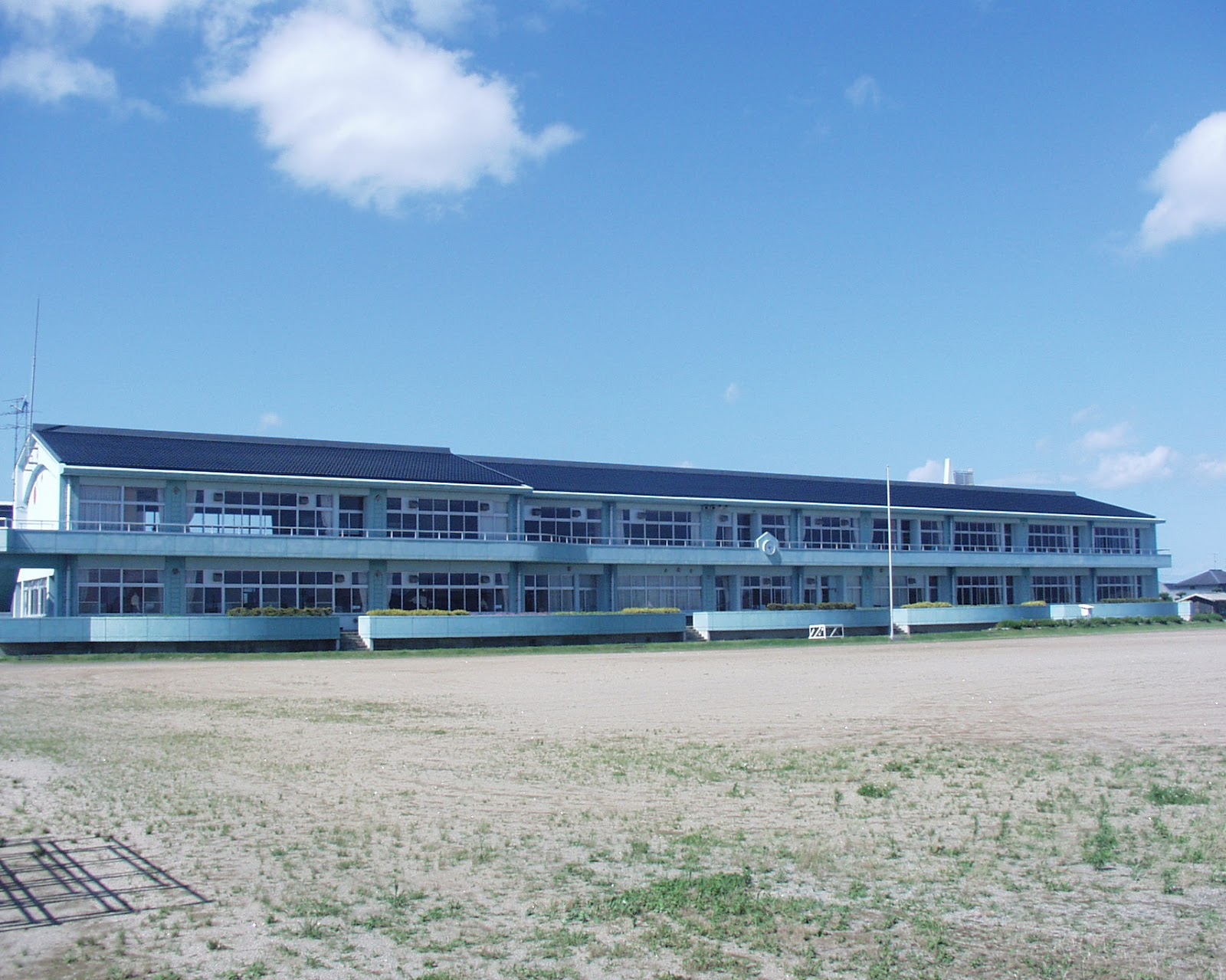
Visiting Ukedo several times after the disaster, the scenery changed every time.
Buildings were being demolished. While that is evidence of reconstruction progressing, it felt as though the town, once destroyed by the tsunami, was being destroyed all over again by the reconstruction work.
For me, having lost my home and my town, Ukedo Elementary School was the only thing left exactly as it was before the disaster. If the school were destroyed, everything from Ukedo would be gone, and my reason for coming back would disappear. I felt so strongly about this that I desperately wanted it to remain.
Despite those feelings, the fate of Ukedo Elementary remained in limbo for about seven years. I was constantly on edge, wondering when it might be torn down. (I even thought about gathering signatures to oppose it if they decided to demolish it…)
When I learned it would be preserved as a disaster memorial, my feeling wasn’t so much “I’m happy!” as it was “Finally, it’s decided!”.
Not a place of sadness,
but a place overflowing with nostalgic memories.

To me, the Ukedo district is a very precious hometown filled with nostalgic memories. Everything is gone now, but it used to be an area with many houses and buildings, strong community ties, and a real sense of people’s daily lives.
I have many memories of Ukedo Elementary as well.
One that stands out is an event called “Sand Art” held at the nearby beach. We were divided into mixed-grade groups, made plans in advance, and on the day of the event, we would complete one large artwork on the sand.
We would receive certificates from the teachers, like the “Excellence Award” or the “Unique Award.” There were dolphins, octopuses, and more—they were the quality you’d expect from elementary students, but every piece showed individual personality.
In our daily lives, there was a lot of interaction across different grades. With only one class per grade, the numbers were small, and since the next room would be a different grade’s classroom, I’d even go to the first graders’ room during lunch break to play together!
Even as a place filled with such memories, here is what I think about my alma mater becoming a disaster memorial. My official answer is that I want it to be a place where people from all over the country can grasp the horror of the disaster and the importance of evacuating… but my truest wish is for it to be “a place where the people of Ukedo can return.”
Many people have moved their family graves away from the Ukedo area, and former residents sometimes find they have no reason left to visit. However, now that Ukedo Elementary is open to the public, I hope it serves as a reason to return—a place where old classmates scattered across the country can say, “Shall we go back for a visit?” and gather for reunions.
A year ago, a former classmate happened to visit the disaster-related facility where I work. They didn’t know I worked there, but we ended up chatting for a while after our chance reunion. I hope Ukedo Elementary becomes a place like that—where people connected to Namie and the school can stop by casually and share memories, a place that reconnects those bonds.
I would be happy if everyone who visits Ukedo knows that many people were here and that life was certainly being lived.
Profile
Ms. Nao Takahashi (Pseudonym)
She was a student at Ukedo Elementary School at the time of the disaster. Currently, she works at a disaster-related facility.